

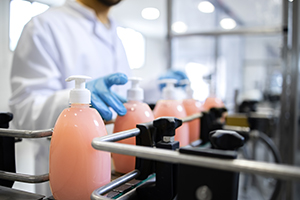
This feature provides HI&I chemists with a complete roadmap for developing probiotic cleaners. We explore the transition from biocidal action to “bio-management,” the enzymatic performance of specific Bacillus strains, critical formulation stability strategies, and the regulatory boundaries necessary for market compliance.
- The Shift to Bio-Management
Traditional cleaners rely on immediate microbial “kill” rates, but probiotic cleaners utilize competitive exclusion. By deploying dormant Bacillus spores that germinate upon contact with organic soils, formulators can create products that “live” on the surface, continuously consuming grease, proteins, and odors for days after application.
- Selecting the Right Microbial Consortium
A robust formulation typically uses a blend of strains to ensure a broad spectrum of soil degradation:
- B. subtilis: The workhorse for protease and amylase production, targeting blood, grass, and starch.
- B. amyloliquefaciens: Superior at breaking down starches and disrupting pathogen biofilms.
- B. megaterium: Highly effective in bioremediation and degrading complex organic pollutants in drains.
Achieve regulatory compliance, supply chain transparency and meet your sustainability initiatives with WERCS Studio software. Learn more here!
III. Formulating for Spore Stability
The primary technical challenge is maintaining spore dormancy in the bottle while ensuring rapid germination on the surface:
- Surfactant Selection: Use high-HLB nonionic surfactants; avoid aggressive cationics that can damage the spore coat.
- pH & Water Activity: Maintain a pH between 6.0 and 9.0 and use stabilizers like glycols to prevent premature germination.
- Preservative Balance: Use “static” preservatives that prevent spoilage without harming the probiotic spores.
- Navigating the Regulatory Landscape
In both the US and EU, labeling is the “litmus test” for regulatory classification.
- Avoid Biocidal Claims: Do not use words like “kills,” “sanitizes,” or “disinfects” unless the product is registered as a pesticide (EPA) or biocide (ECHA).
- Permissible Claims: Focus on “deep cleaning,” “long-lasting odor control,” and “breaking down organic buildup”.
- Compliance: New 2025 EU regulations require all microbial cleaners to use only Risk Group 1 strains and be free of antibiotic resistance.
Sources
- Contributing Writer’s Guidelines
- A Chemist Guide To Cleaning Formulations
- Probiotic-Based Cleaning Solutions (MDPI)
- Regulatory Changes for Household & Industrial Cleaners (UL Prospector)
- Comparing Technology and Regulatory Landscape of Probiotics (NIH)
The views, opinions and technical analyses presented here are those of the author or advertiser, and are not necessarily those of ULProspector.com or UL Solutions. The appearance of this content in the UL Prospector Knowledge Center does not constitute an endorsement by UL Solutions or its affiliates.
All content is subject to copyright and may not be reproduced without prior authorization from UL Solutions or the content author.
The content has been made available for informational and educational purposes only. While the editors of this site may verify the accuracy of its content from time to time, we assume no responsibility for errors made by the author, editorial staff or any other contributor.
UL Solutions does not make any representations or warranties with respect to the accuracy, applicability, fitness or completeness of the content. UL Solutions does not warrant the performance, effectiveness or applicability of sites listed or linked to in any content.