


Sustainability has become one of the most influential drivers in the cleaning and home care industry. Consumers are demanding products with a reduced environmental impact, retailers are tightening sustainability requirements, and governments are increasing scrutiny of environmental claims. Yet one challenge remains constant: cleaning products must still work.
As a formulation consultant with experience supporting major brands and commercial launches, I have seen first-hand that successful sustainable products are not created by replacing one ingredient with a greener alternative. They are developed through a strategic balance of chemistry, performance, regulatory compliance, cost, and consumer expectations. The key is understanding that sustainability is a formulation strategy rather than a marketing label.
What Does Eco Friendly Really Mean?
One of the biggest misconceptions in the market is that there is a universal definition of eco-friendly. In reality, sustainability is measured through multiple factors including biodegradability, renewable content, toxicity profile, carbon footprint, packaging impact, and resource efficiency.
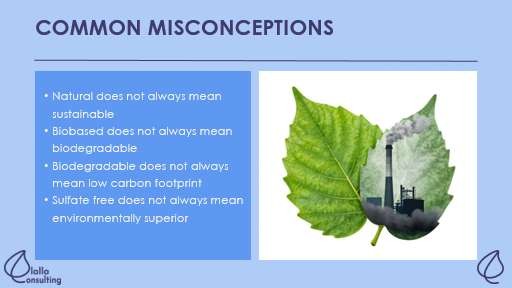
Many brands still assume that natural ingredients automatically deliver a better environmental profile. However, natural does not always mean sustainable, biobased does not always mean biodegradable, and biodegradable does not always mean lower carbon emissions. Truly sustainable product development requires evidence-based decisions rather than marketing assumptions.
Why Sustainability Is Reshaping Cleaning Product Development
Several market forces are accelerating the transition towards sustainable cleaning solutions.
Consumers increasingly expect brands to demonstrate environmental responsibility. Retailers are introducing sustainability scorecards and supplier requirements. Environmental regulations continue to evolve, affecting chemical selection, packaging, and waste management practices. At the same time, corporate ESG commitments are influencing innovation pipelines across the industry.
This means formulators must achieve multiple objectives simultaneously. A product must be effective, safe, stable, commercially viable, and environmentally responsible. The challenge is not perfection but optimization.
Sustainable Formulation Starts with Ingredient Selection
Every ingredient category contributes to both performance and sustainability outcomes.
Surfactants
Surfactants remain the foundation of cleaning performance. Traditional systems continue to offer excellent efficacy, but newer alternatives are enabling improved sustainability profiles.
Examples include:
- Alkyl polyglucosides
- Methyl ester sulfonates
- Amino acid surfactants
- Sophorolipids
- Rhamnolipids
These materials can offer advantages such as biodegradability, renewable sourcing, and reduced environmental persistence. However, performance, compatibility, cost, and supply chain availability must still be carefully evaluated.
Chelating Agents
Chelating agents play a crucial role in cleaning efficiency by binding metal ions such as calcium and magnesium.
For many years EDTA dominated the market due to its effectiveness and affordability. Today, alternatives such as GLDA and MGDA are gaining attention because of their improved biodegradability profiles while maintaining excellent performance in hard water systems.
Green Solvents
Bio based solvents such as limonene, ethyl lactate, and bioethanol are becoming increasingly popular. These materials can deliver strong grease removal while supporting renewable sourcing strategies.
The most successful formulations balance solvent performance with volatility, safety, regulatory requirements, and cost considerations.
E COURSE: Eco-Friendly Cleaning Formulations: How to Design Sustainable Products Without Sacrificing Performance. Learn more!
Preservation Systems
Preservative free claims may appeal to consumers, but they are often misunderstood.
Most water-based cleaning products require effective preservation to prevent microbial contamination during manufacturing, transportation, storage, and consumer use. Sustainability should never come at the expense of product safety or quality.
The Life Cycle Perspective Matters
One of the most important lessons in sustainable formulation is that ingredients alone do not determine environmental performance.
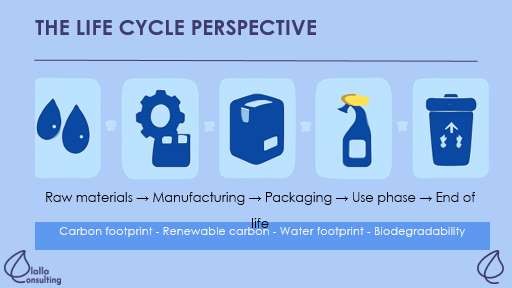
A full life cycle perspective considers:
- Raw materials
- Manufacturing processes
- Packaging
- Transportation
- Consumer use
- End of life disposal
In many cases, innovations such as refill systems or concentrated formats can deliver greater environmental benefits than simply replacing one ingredient with another.
The Rise of Waterless and Concentrated Formats
One of the most exciting developments in the cleaning sector is the growth of concentrated and waterless products.
Traditional ready to use cleaners often contain more than 90 percent water, creating unnecessary transportation and packaging burdens. Tablet based and refillable formats allow consumers to add water at the point of use, significantly reducing packaging requirements and transportation emissions.
This shift demonstrates an important reality: sustainability can be achieved not only through ingredient innovation but also through product format innovation.
Why Sustainability Claims Often Fail
Many brands invest heavily in sustainability messaging but overlook claim substantiation.
Terms such as “green”, “natural”, “eco-friendly”, and “environmentally friendly” can create significant regulatory and reputational risks if not properly supported. Strong sustainability claims require evidence-based validation including ingredient selection data, packaging assessments, performance testing, and in some cases life cycle evaluation.
The most credible brands integrate sustainability considerations from the earliest stages of development rather than attempting to retrofit claims after formulation is complete.
The Future of Sustainable Cleaning
The next generation of cleaning products will increasingly leverage:
- Biosurfactants
- Enzymes
- Biotechnology derived ingredients
- Carbon captured raw materials
- Waterless cleaning technologies
These innovations offer exciting opportunities for brands seeking to enhance sustainability while maintaining the performance consumers expect.
Chemical compliance management and enterprise SDS authoring software. Learn more!
Conclusion
Sustainable cleaning products are no longer a niche category. They represent the future of formulation innovation. Success depends on taking a holistic approach that combines environmental responsibility, technical performance, regulatory compliance, and consumer acceptance.
The brands that will lead the market are those that understand sustainability is not about selecting a single green ingredient. It is about designing smarter products from the ground up.
Ready to Develop Your Next Sustainable Cleaning Product?
Whether you are launching a new cleaning brand, reformulating an existing product, pursuing certification, or strengthening sustainability claims, Olalla Consulting can help you navigate formulation, regulatory compliance, ingredient selection, claim substantiation, and market positioning.
Visit Olalla Consulting to discover how our science led and commercially focused consultancy can support your next innovation project.

The views, opinions and technical analyses presented here are those of the author or advertiser, and are not necessarily those of ULProspector.com or UL Solutions. The appearance of this content in the UL Prospector Knowledge Center does not constitute an endorsement by UL Solutions or its affiliates.
All content is subject to copyright and may not be reproduced without prior authorization from UL Solutions or the content author.
The content has been made available for informational and educational purposes only. While the editors of this site may verify the accuracy of its content from time to time, we assume no responsibility for errors made by the author, editorial staff or any other contributor.
UL Solutions does not make any representations or warranties with respect to the accuracy, applicability, fitness or completeness of the content. UL Solutions does not warrant the performance, effectiveness or applicability of sites listed or linked to in any content.
