Industry Insights
Explore insights from industry experts across topics like regulatory news, formulation best practices, market innovations and opportunities, and more. Want to contribute? Learn how you can share your expertise.
LATEST INDUSTRY INSIGHTS
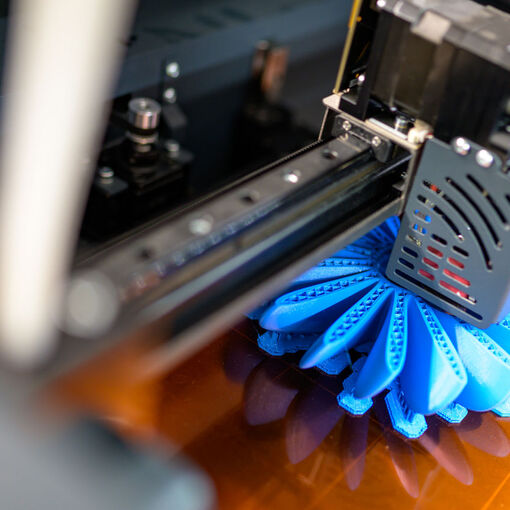
4D Printing – the extra dimension
For decades, additive manufacturing (AM) has focused on optimising three-dimensional spatial architectures, optimising strength-to-weight ratios … Continued

How Paint is Formulated
A paint batch can look fine in the can and still fail where it matters: … Continued

Best Practices for Formulating with Niacinamide
Why Niacinamide Matters to Formulators Unlike many trend-driven cosmetic actives, niacinamide offers multiple benefits across … Continued
INDUSTRY INSIGHTS ARCHIVE

By John Bozzelli The appearance of bubbles, voids, sinks or blisters on an injection-molded part make up the most significant causes for part rejects due to cosmetic requirements. These troublesome “features”, although not the most common of problems when injection-molding … Continued
Here’s a report showing the most popular articles and case studies that were downloaded so far this year from our website. Bonding Polyethylene, Polypropylene Their Co-Polymers & Alloys & UV Curing Adhesives Shine – Master Bond Inc. High Performance Meets … Continued
By Mike Kmetz, Managing Director, UL IDES More resins, more choices. How do you find the right one? These are interesting times for the plastics industry. Increasing resin price, decreasing supply, pressure from off-shore, a troubled automotive sector – are … Continued
By Roger Huarng and Stephane Morin, Alliance Polymers and Services Thermoplastic polyurethanes (TPUs) can be found just about anywhere, filling the void between flexible rubber and rigid plastic or simply serving as a replacement for other materials. Applications are limitless … Continued
By Levic Plastics The National Highway Traffic Safety Administration has recommended adoption of a Federal Motor Vehicle Safety Standard (FMVSS) that required vehicles with trunks to have emergency release mechanisms for enclosed areas. Established in 2001, the FMVSS requires that … Continued