Industry Insights
Explore insights from industry experts across topics like regulatory news, formulation best practices, market innovations and opportunities, and more. Want to contribute? Learn how you can share your expertise.
LATEST INDUSTRY INSIGHTS
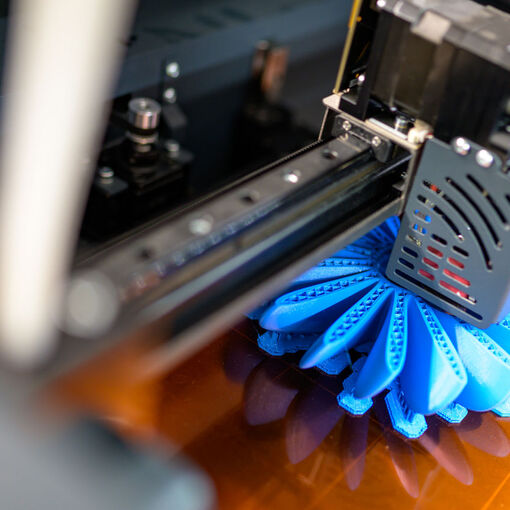
4D Printing – the extra dimension
For decades, additive manufacturing (AM) has focused on optimising three-dimensional spatial architectures, optimising strength-to-weight ratios … Continued

How Paint is Formulated
A paint batch can look fine in the can and still fail where it matters: … Continued

Best Practices for Formulating with Niacinamide
Why Niacinamide Matters to Formulators Unlike many trend-driven cosmetic actives, niacinamide offers multiple benefits across … Continued
INDUSTRY INSIGHTS ARCHIVE

Polyester is a specific type of synthetic polymer. To be classified as a polyester, a polymer must contain the ester functional group (-COO-) in its main molecular chain. The commonly used engineering thermoplastics PBT (Polybutylene Terephthalate) and PET (Polyethylene Terephthalate) … Continued

In the competitive landscape of personal care, sunscreen formulation remains one of the most challenging and technically demanding categories. As we move into 2026, the industry is shifting away from seasonal messaging toward “year-round intelligent photoprotection”. Today’s formulators must balance the rigorous physics of … Continued

Hidden in Plain Sight: The Materials That Shape Everyday Safety Series Plastic names are often treated like answers. A reusable food container says “PP.” A water bottle says “HDPE.” A phone case advertises “PC” or “Lexan.” To most consumers, and … Continued

Most paints and inks contain solid particles, mostly pigments and/or fillers. Two instability problems, flocculation (the spontaneous gluing together of separated particles because of particle-to-particle attraction)1,2 and sedimentation (the sinking of particles because of gravity), can occur with solid particles … Continued

Plastic compounding involves blending base polymers with additives, fillers, reinforcements or colorants to create materials with targeted mechanical, thermal or aesthetic properties. As industries focus on lightweighting, performance and sustainability, compounded plastics Understanding how compounding influences material performance and availability … Continued