

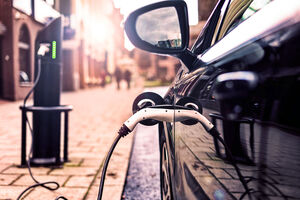
 The transition to electric vehicles is often discussed as a threat to lubricant demand because battery-electric vehicles eliminate engine oils and reduce the number of lubricated components. While EVs use fewer traditional lubricants than internal combustion engine vehicles, that view tells only part of the story.
For lubricant manufacturers, additive suppliers and formulators, electrification is creating highly demanding fluid challenges. The market is shifting away from commodity lubrication solutions and toward engineered fluids capable of managing electrical, thermal, mechanical and material-compatibility requirements simultaneously.
Rather than reducing the need for innovation, EVs are accelerating it.
The rise of e-fluids
Modern EV drivetrains increasingly integrate electric motors, power electronics, bearings and reduction gears into compact e-axles. These systems create demand for fluids that can support gear and bearing lubrication, heat transfer, corrosion protection, electrical performance, and material compatibility.
Industry reviews describe integrated e-modules as applications in which fluids may need to balance tribological, rheological, electrical and thermal properties while interacting with copper wiring, high-voltage components, and specialized polymers.
This is a significant departure from conventional automotive lubricants, where electrical behavior and direct cooling are less central to the fluid design brief. The result is growing interest in fluids specifically designed for EV applications rather than simple adaptations of traditional gear oils or automatic transmission fluids.
Thermal management will become a primary design driver
Battery charging speed, driving range, power density, and battery life are closely connected to heat management. As EV systems operate at higher power, efficient thermal control becomes a critical design constraint.
Recent research examines dielectric coolant liquids for immersion-based battery cooling because these fluids allow direct contact with electrically active components while maintaining insulation performance. Research is also exploring hybrid approaches that combine dielectric fluids with phase-change materials to buffer short, high-power thermal events.
UL Solutions materials describe direct oil cooling as an approach in which specialized dielectric oil is sprayed onto motor windings or circulated through motor components. The same materials state that direct oil cooling can remove heat more effectively than water jackets alone and support smaller motor designs.
For formulators, thermal performance must therefore be evaluated alongside wear protection and oxidation control. Important properties include heat-transfer behavior, dielectric reliability, electrical conductivity, viscosity, and long-term thermal stability.
Deliver safer, more sustainable and software-defined mobility. Learn more here!
Material compatibility requirements are expanding
EV platforms introduce copper windings, electrical insulation systems, magnets, advanced polymers, and other materials that may contact lubricating or cooling fluids.
UL Solutions resources emphasize compatibility between cooling fluids and solid insulation materials used in EV electrical systems. They also note that lubricant additives can be reactive and aggressive at elevated temperatures, creating a need to verify whether insulation materials retain their key properties after fluid exposure.
A formulation that performs well in a gear or bearing test may still be unsuitable if it damages copper, electrical insulation, elastomers or polymers. Compatibility testing is therefore becoming a larger part of fluid qualification.
Higher efficiency is increasing interest in lower viscosity
Range and energy efficiency remain important EV design priorities. Reducing drivetrain friction and churning losses can support efficiency, which increases interest in lower-viscosity e-fluids.
The formulation challenge is to reduce viscosity without sacrificing anti-wear protection, oxidation stability, bearing durability, gear protection, or material compatibility. This places greater emphasis on base-fluid selection, additive efficiency, and validation under high-speed electric-drive conditions.
Sustainability pressures are influencing product development
Electrification is developing alongside wider pressure on the lubricant industry to address hazard classifications, PFAS, environmental toxicity, biodegradability, and lifecycle impacts.
Industry materials describe interest in bio-based and lower-toxicity approaches, but also identify technical barriers including hydrolytic stability, thermo-oxidative stability, seal swelling, solubility, performance, cost and global availability.
For EV fluids, sustainability expectations may increasingly encompass both vehicle efficiency and the environmental profile of the fluid. Formulators should expect closer evaluation of raw-material choices, hazardous substance restrictions, product longevity, and end-of-life considerations.
What these trends mean for formulators
The next stage of electrification is not simply a story of lower lubricant volume. It is a change in the type and complexity of fluid performance the market requires. Key development areas include:
- E-fluids and integrated e-axle lubricants
- Advanced thermal-management and dielectric cooling fluids
- Copper- and insulation-compatible additive systems
- Low-viscosity, efficiency-focused formulations
- Broader material-compatibility validation
- Long-life fluids with strong oxidation and thermal stability
- Lower-toxicity and regulation-ready chemistries
Looking ahead
Electrification is transforming lubricant development into a multidisciplinary engineering challenge. The most successful EV fluids will need to manage friction, wear, heat, electrical behavior, material compatibility, and durability at the same time.
For formulators, the opportunity lies in designing fluids as part of the electric-drive system rather than treating them as interchangeable maintenance products. Organizations that build expertise across tribology, thermal management, electrical insulation and compatibility testing will be better positioned to respond as EV architectures continue to evolve.
Resources
Accessed August 19, 2026.
- Shankar, L. S.; Cseke, T.; Weltsch, Z.. Next-Generation Thermal Management in EVs: Combining Dielectric Insulation with Latent Heat Storage. Clean Technologies 8(4), 100 (2026). View source
- UL Solutions. UL EIS Services – Overview – 2026 MP RT. Internal presentation covering EV motor cooling-fluid resistance, direct oil cooling, insulation compatibility and referenced test standards. View source
- Occupational Safety and Health Administration. Metalworking Fluids: Safety and Health Best Practices Manual. View source
- Society of Tribologists and Lubrication Engineers. Sustainability Opportunities for Tribology special report announcement (2024). View source

The views, opinions and technical analyses presented here are those of the author or advertiser, and are not necessarily those of ULProspector.com or UL Solutions. The appearance of this content in the UL Prospector Knowledge Center does not constitute an endorsement by UL Solutions or its affiliates.
All content is subject to copyright and may not be reproduced without prior authorization from UL Solutions or the content author.
The content has been made available for informational and educational purposes only. While the editors of this site may verify the accuracy of its content from time to time, we assume no responsibility for errors made by the author, editorial staff or any other contributor.
UL Solutions does not make any representations or warranties with respect to the accuracy, applicability, fitness or completeness of the content. UL Solutions does not warrant the performance, effectiveness or applicability of sites listed or linked to in any content.