

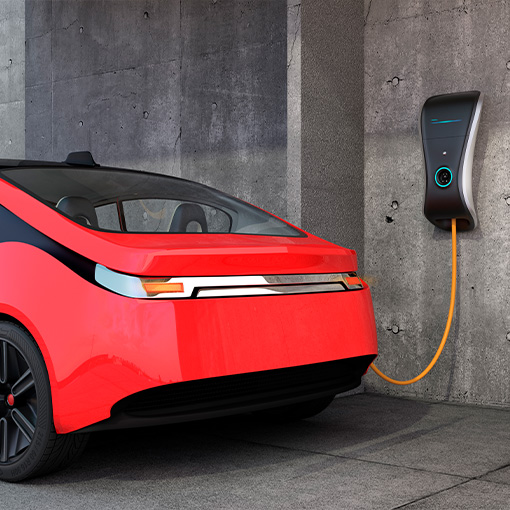
 The rapid global transition from internal combustion engines (ICEs) to battery electric vehicles (EVs) has completely upended automotive design frameworks. For over a century, automotive lubricants were formulated to solve a specific, high-temperature combustion problem: handling soot, preventing oxidative breakdown from fiery cylinders, and cushioning piston friction via classic additives like zinc dialkyldithiophosphate (ZDDP) (Antony Jose, 2026).
EVs don’t have pistons or fiery cylinders, but they have introduced a completely new set of mechanical, electrical, and thermal challenges. Because of this, the fluids inside electric cars, known as e-fluids, represent a major paradigm shift in tribology, which is the science of friction, wear, and lubrication.
The New Design Rules for EV Lubrication
In a battery electric vehicle, the lubricant does not just float around the gears; it often flows through the electric motor itself, coming into direct contact with high-voltage electronics, copper wiring, and specialized polymers (Opia, 2025). This requires fluids to balance three distinct jobs at the same time:
- Electrical Conductivity & Insulation
In a traditional car, oil never needs to touch an electrical current. In an EV, the e-fluid bathes the electric motor and must act as a precise electrical insulator (dielectric) to prevent catastrophic short circuits (Hahn, 2025; Opia, 2025). However, if the fluid is too insulating, static electricity can build up, resulting in sudden micro-discharges that puncture bearing surfaces and cause severe pitting which is a failure mechanism known as fluting or electrical arc erosion (Wang et al., 2024). E-fluids must hit a precise “sweet spot” of electrical conductivity to bleed off static charge safely.
- Thermal Management at High Speeds
EV electric motors operate at extreme rotational speeds, often exceeding 20,000 RPM. This creates rapid shear stress on the fluid and generates immense localized heat. Modern e-fluids function as a vital cooling medium, absorbing and dissipating heat away from the copper end-windings to prevent power loss and material degradation (Hahn, 2025; Antony Jose, 2026).
- Material Compatibility
The chemicals used in old motor oils are highly corrosive to copper, which is the primary component of EV motor windings. A modern e-fluid must protect high-speed reducers and gears from wear while remaining completely non-reactive to copper, delicate sensor plastics, and elastomer seals (Opia, 2025; Antony Jose, 2026).
Work smarter and win more, with powerful software to manage regulatory, supply chain and sustainability challenges, learn more about ULTRUS here!
Recent Technological Advancements
To meet these tough requirements, lubricant formulators have shifted away from traditional petroleum basestocks, embracing several cutting-edge innovations:
- Ultra-Low Viscosity Formulations: To squeeze every mile of range out of an EV battery, drag losses within the gearbox must be minimized. Formulators are creating ultra-low viscosity oils that maintain a ultra-thin protective film under extreme loads without sacrificing wear protection (Opia, 2025).
- Water-Based Lubricants (WBLs): One of the most exciting recent breakthroughs involves using fully formulated water-based fluids in EV transmission systems. Research shows that WBLs offer superior specific heat capacity and thermal conductivity compared to oil, dropping gear temperatures and boosting overall peak gearbox efficiency by roughly 1.6% to 1.9% (Hasan, 2026).
- Nanoparticle Additives: Advanced nano-lubricants (using materials like magnetic nanoparticles, carbon nanotubes, and eco-friendly bio-esters) are being deployed to dramatically reduce friction coefficients, offering up to a 29% reduction in friction compared to legacy synthetic oils (Kumar, 2025; Opia, 2025).
Future Predictions: What Lies Ahead
As electric vehicle architectures mature toward the 2030s, the fluids that protect them will evolve in several keyways:
The “Fill-for-Life” Reality
Because EVs operate without combustion byproducts like soot, fuel dilution, and acidic sludge, the fluid degrades much more slowly (Grützmacher, 2025). The industry is rapidly moving toward true fill-for-life lubrication, where the e-fluid injected at the factory will last the entire 15-to-20-year lifespan of the vehicle (Grützmacher, 2025).
Smart and Adaptive Fluids
Future EV architectures will likely incorporate intelligent lubrication systems. Researchers are studying electrorheological and magnetorheological fluids, smart liquids that instantly alter their viscosity or flow behavior when an electric or magnetic field is applied (Wang et al., 2024). This will allow an EV’s onboard computer to change fluid properties in real time depending on whether the car is cruising on a cold highway or accelerating hard off the line.
Total System Integration
The current approach uses distinct fluids for battery cooling, motor cooling, and gear lubrication. The holy grail of EV engineering is the single e-fluid concept, a single, highly engineered, bio-based nano-fluid that handles battery thermal management, electric motor stator cooling, and differential gear protection simultaneously, significantly reducing vehicle weight and manufacturing complexity (Hasan, 2026).
The shift to electric mobility is doing far more than just replacing fuel tanks with battery packs, it is completely rewriting the laws of automotive lubrication. As the industry moves away from legacy internal combustion formulas, the development of specialized e-fluids, ultra-low viscosity synthetics, and water-based alternatives will play a crucial role in maximizing driving range and extending vehicle lifespans. Ultimately, the future efficiency of electric vehicles will be determined just as much by the invisible chemistry circulating through their motors as by the advanced batteries powering them.
References
Antony Jose, S. (2026). A comprehensive review of lubricant behavior in internal combustion, hybrid, and electric vehicles: Thermal demands, electrical constraints, and material effects. MDPI Lubricants
Grützmacher, P. G. (2025). The promise of solid lubricants for a sustainable future. Advanced Materials
Hahn, H. (2025). Unveiling the future: Insights from the STLE e-mobility conference. Tribology & Lubrication Technology,
Hasan, M. (2026). Water-based lubricants for electric vehicle transmission applications: Properties, tribological performance and efficiency (Doctoral dissertation, Luleå University of Technology).
Kumar, V. B. (2025). Sustainable and advanced lubricating materials for automotive industrial applications. MDPI Lubricants
Opia, A. C. (2025). Electric vehicles as a promising trend: A review on adaptation, lubrication challenges, and future work. MDPI Lubricants
Wang, X., Wang, Q. J., Ren, N., & England, R. (2024). Lubrication subjected to effects of electric and magnetic fields: Recent research progress and a generalized MEMT-field Reynolds equation. Frontiers in Mechanical Engineering

The views, opinions and technical analyses presented here are those of the author or advertiser, and are not necessarily those of ULProspector.com or UL Solutions. The appearance of this content in the UL Prospector Knowledge Center does not constitute an endorsement by UL Solutions or its affiliates.
All content is subject to copyright and may not be reproduced without prior authorization from UL Solutions or the content author.
The content has been made available for informational and educational purposes only. While the editors of this site may verify the accuracy of its content from time to time, we assume no responsibility for errors made by the author, editorial staff or any other contributor.
UL Solutions does not make any representations or warranties with respect to the accuracy, applicability, fitness or completeness of the content. UL Solutions does not warrant the performance, effectiveness or applicability of sites listed or linked to in any content.