

Presented by Americhem
Recorded on October 29, 2026
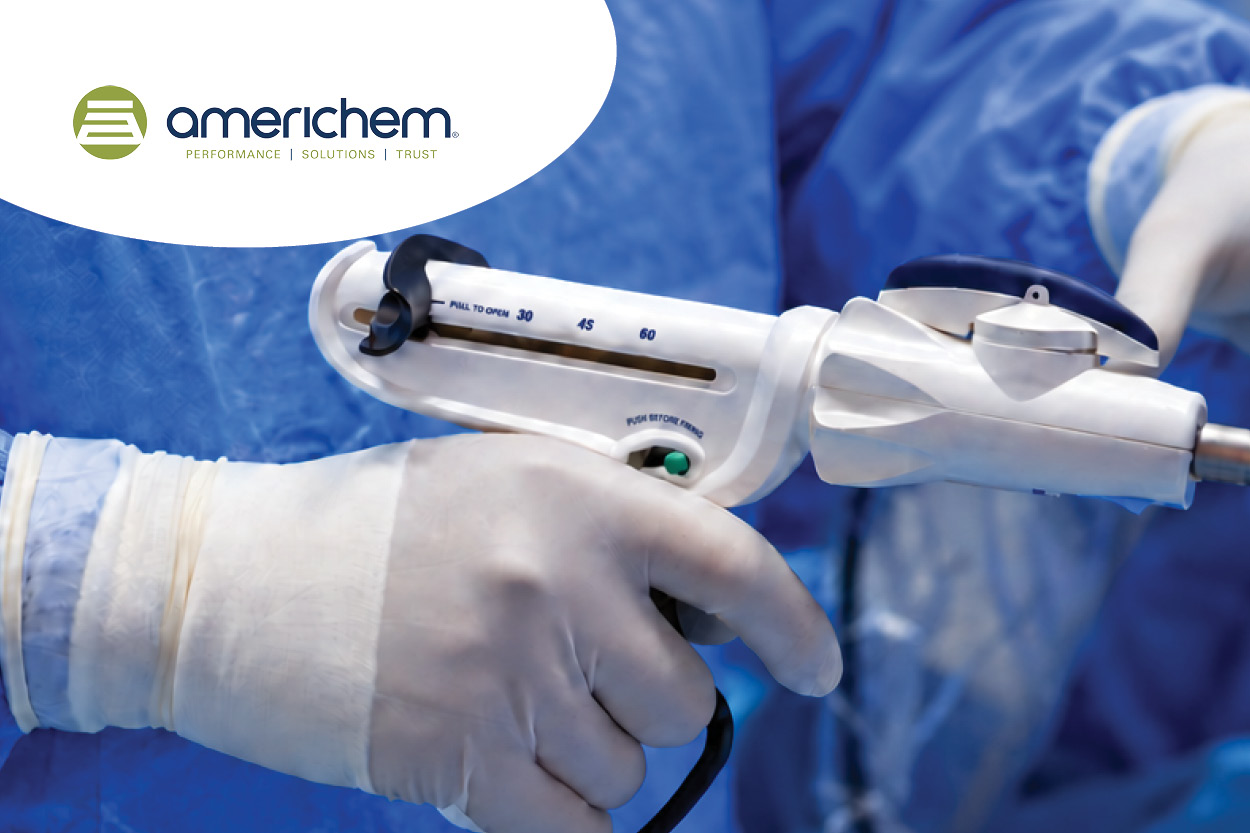
The right material for a surgical instrument depends on more than its properties on a data sheet. Geometry, mating interfaces, movement, sterilization, assembly, and manufacturing requirements can all influence how the material performs in the finished device. Those demands also change with contact duration, motion type, reprocessing claim, and production volume.
A high-volume disposable handle built for a single sterile barrier places one set of demands on the polymer. A reusable instrument validated through wash chemistry and repeated sterilization to a claimed cycle count places another. An articulated instrument, whether manually operated or used in a robotic procedure, introduces a different set of material requirements.
Designed for OEM and contract manufacturing teams involved in surgical-device development, this webinar will examine the material and design questions teams should settle when developing disposable instruments, reusable instruments, and articulated instruments used in robotic procedures.
Through three application examples, the speakers will show how motion and wear, dimensional stability, sterilization and cleaning chemistry, identification, molding, and assembly interact within the finished device. The discussion will connect those interactions to manufacturability, qualification, formulation lock, and lot-to-lot consistency, and show why alignment across material, part design, tooling, and processing needs to happen early in development.
Attendees will leave with a practical framework for asking the right material questions while the design can still accommodate the answers.
Want to learn more?
Explore material solutions and technical considerations for surgical device applications.

The views, opinions and technical analyses presented here are those of the author or advertiser, and are not necessarily those of ULProspector.com or UL Solutions. The appearance of this content in the UL Prospector Knowledge Center does not constitute an endorsement by UL Solutions or its affiliates.
All content is subject to copyright and may not be reproduced without prior authorization from UL Solutions or the content author.
The content has been made available for informational and educational purposes only. While the editors of this site may verify the accuracy of its content from time to time, we assume no responsibility for errors made by the author, editorial staff or any other contributor.
UL Solutions does not make any representations or warranties with respect to the accuracy, applicability, fitness or completeness of the content. UL Solutions does not warrant the performance, effectiveness or applicability of sites listed or linked to in any content.