

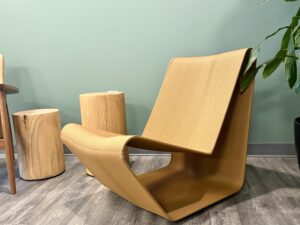
 Lignetics Group, a Colorado-based company founded over 30 years ago to develop sustainable products from wood waste, recently developed NaturFil™, a wood flour concentrate engineered to meet the growing demand for sustainable filler additives in plastic manufacturing.
NaturFil offers an alternative to traditional petroleum- and mineral-based additives in polymer applications. Derived from finely ground natural wood fibers, it is a biodegradable filler material for use in rigid and semi-rigid polymer composites. It enhances mechanical strength and overall product performance at a lower cost than petroleum polymers, and at half the weight of traditional mineral fillers, according to the company.

NaturFil fulfills a need among plastics processors who have long wanted to incorporate wood flour into their processing operations for cost efficiency but have shied away from the material due to concerns about the processability and safety of introducing conventional wood flour into their operations, said Frank Kvietok, senior director of innovation at Lignetics.
Pelletizing the wood flour eliminates the mess often associated with bio-fillers and makes the additive easier to process since it is in a familiar pellet form. Concentrating the wood flour into pellets also prevents the formation of flammable dust clouds during processing that can occur with loose wood flour.
“If wood flour is something you have wanted to work with, but you had very sound, plausible, logical reasons to say, ‘No, that’s going to screw up my process; it’s going to be dangerous in my facility,’ it’s no longer a valid excuse,” Kvietok told attendees at the AMI Plastics World Expos in Cleveland last November.
Lignetics held a “soft launch” of NaturFil last spring, but considered the November plastics show its hard launch.
“I would say the November plastics expo was really the quinceañera, the proper coming of age,” Kvietok said. It was the first trade show at which the company demonstrated the product to the plastics industry.
While plastics compounders are expected to be NaturFil’s largest customer segment, the additive can be used directly in extrusion and injection molding processes. It reduces costs while adding stiffness and dimensional stability.
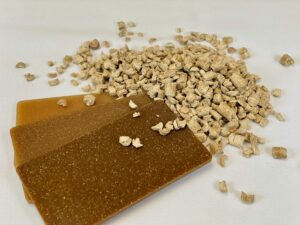
NaturFil consists of 97.5 percent wood flour and 2.5 percent binder, which converts the material into an easy-to-process pellet.
“We now produce a pellet that we’ve demonstrated disperses as readily as loose conventional wood flour,” Kvietok said.
Because lignin, a complex organic polymer in wood cell walls, isn’t particularly miscible with most traditional thermoplastics, Lignetics adds a small amount of a thermoplastic with a lower melt temperature.
“It’s at a very low percentage for a variety of reasons, but probably really first and foremost was to make the product, that pellet, as ubiquitous as possible in terms of being able to work with a wide range of formulations,” Kvietok said.
NaturFil is compatible with thermoplastics such as polypropylene, polyethylene, polyvinyl chloride, acrylonitrile butadiene styrene, and bioplastics, including polylactic acid and polyhydroxyalkanoates.
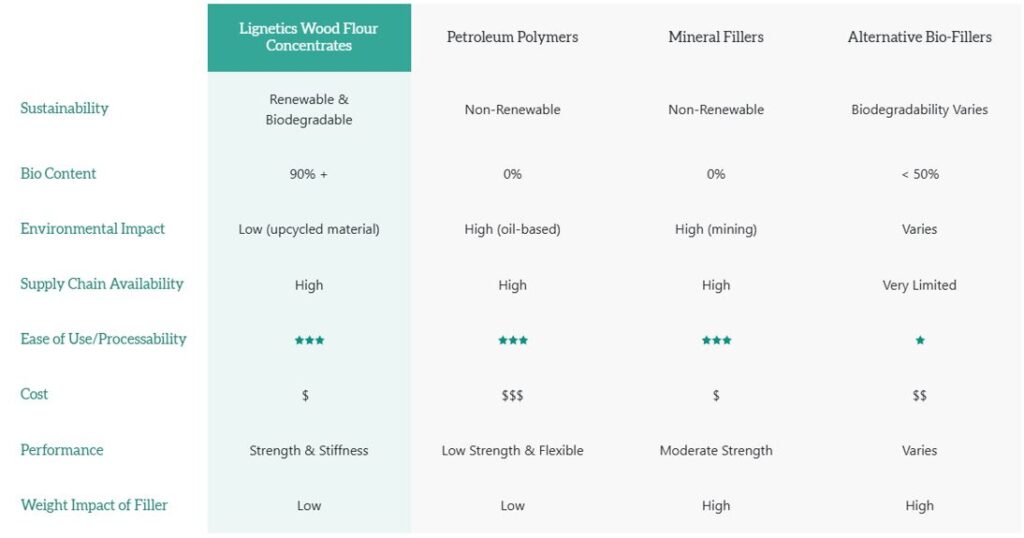
“We are the only ones doing it at that very low binder level, and we’re also the only ones doing it at a cost where it can be competitive with mineral fillers,” Kvietok said.
While compatible with most thermoplastics, certain applications may require a small amount of compatibilizer.
NaturFil can be used in building and construction materials, automotive interior components, furniture, consumer goods, packaging solutions, and agricultural products.
“We’re talking to folks in virtually every corner of the plastics market, everything from single-use food items, like cutlery, to more durable packaging applications, to automotive part applications,” Kvietok said.
Lignetics highlighted the following advantages of NaturFil at the Cleveland plastics show: it’s renewable, biodegradable, lightweight, enhances strength and stiffness, reduces thermal expansion, and enhances dimensional stability in varying temperatures. Its appearance in products also offers a unique visual appeal.
End users also value the green appeal of wood flour.
The wood used in NaturFil is upcycled from residual materials of the lumber and wood products industries that would typically end up in a landfill.
“A lot of folks, from a marketing and a consumer appeal standpoint, like the idea of using wood. In addition to the environmental benefit that it provides, it simply sounds more compatible with the application,” Kvietok said.
For instance, a salad bowl made with wood flour could be marketed as a more environmentally friendly product.
“The wood flour has a lot of appeal, and many of our customers are very much wanting the wood flour to be visible,” he said.
Depending on the application, NaturFil can replace up to 50 percent of the plastic resin in a product. In pellet form, NaturFil may increase throughput by up to two to three times compared with conventional wood flour, according to the company.
Discover Material Selection with Prospector Premium, learn more here!
The company has also developed a version that recently received ‘suitable status’ as a food contact material under FDA guidelines for applications like utensils and salad bowls. Achieving approval requires careful control of material sources to avoid contamination, Kvietok said.”
A current limitation of NaturFil is its use in high-temperature applications, but Lignetics is working on a variation capable of withstanding temperatures above 300 degrees Fahrenheit.
“We are working on improving the thermal stability of the wood,” Kvietok said. “We’re making it so that you can use it with nylon, for instance, or in an automobile in an application under the hood where there are high temperatures.”
MOCOM Compounds Corp., of Duncan, S.C., part of MOCOM GmbH & Co. KG of Hamburg, Germany, was one of the earliest users of NaturFil and is using it in trials.
MOCOM is a compounder of thermoplastic polymers, offering the plastics processing industry a comprehensive range of high-performance customized and standard compounds.
“We began working with NaturFil in 2025 in response to increasing customer demand for solutions that support reduction, reuse, and recycling initiatives,” said Jack Chiang, key account manager with MOCOM Compounds. “What motivated us was its unique position as a wood flour byproduct from sawmills, allowing us to incorporate a renewable, waste-derived material into our compounds. This aligns closely with our sustainability goals while also offering potential performance benefits, such as enhanced stiffness and improved aesthetics, depending on the formulation.”
Uses MOCOM envisions for the product are in housewares, cutlery, baby goods, straws, and even additive manufacturing, Chiang said.
“The uses are endless,” he added.
MOCOM is currently compounding a maximum of 30 percent Naturfil with thermoplastics, but they are looking into expanding that percentage.
“We are continuously evaluating innovative techniques in process design and optimization to push this level to replace even more with optimistic results thus far,” Chiang said.
One limitation for the use of NaturFil is in processes that require high-temperature processing, he said.
“Any process that exceeds 200 degrees Celsius can start to burn the wood flour,” Chiang said.
While cost savings may be possible using NaturFil, that is not MOCOM’s reason for using the filler, he said.
“Cost savings at this point is not a point of emphasis because the technology is so new, and we desired to do our part in the circularity solutions,” Chiang said. “We jointly desire, with our customers, to go beyond just a cost savings goal.”
Ultima Plastics, an Evansville, Ind., compounder, also has been running trials with NaturFil.
“We’re taking the NaturFil, putting it with polypropylene, and making a finished product that we can sell into injection molding for various applications,” said Ed Reising, director of product development at Ultima Plastics.
It can also be used in extrusion processes, he added.
Early trials have shown encouraging results, he said. In one case, a 30 percent NaturFil compound was successfully used in an extruded sheet application, which Reising called a pretty good percentage.
One of the most compelling aspects of the material is its combination of mechanical performance and visual appeal. Testing has shown that products manufactured with a NaturFil compound exhibit good tensile strength, toughness, impact resistance, and excellent dispersion of the wood filler, Reising said.
Beyond performance, the material offers something unusual for plastics, a convincing wood-like appearance. The company has been molding test plaques in a lab.
“It very much looks like a wood finish,” Reising said. “One of our guys in the lab said, ‘Where did the plastic go?’”
Ultima Plastics, through testing, is learning to adjust processing parameters to accommodate moisture in the wood filler, which can slow production, Reising said. The company is adjusting the compounding process, including using enhanced venting and vacuum systems and trying different screw configurations.
“It’s quite a bit different than just running plastic compounds,” he said.
Current testing focuses on formulations ranging from 10 percent to 30 percent NaturFil content, with 30 percent already showing strong promise, Reising said.
The outlook is positive. Interest from plastics processors in NaturFil continues to grow, driven by the material’s combination of sustainability, performance, and aesthetics, he said.
Customers are interested in a bio product that meets their performance requirements, he said.

The views, opinions and technical analyses presented here are those of the author or advertiser, and are not necessarily those of ULProspector.com or UL Solutions. The appearance of this content in the UL Prospector Knowledge Center does not constitute an endorsement by UL Solutions or its affiliates.
All content is subject to copyright and may not be reproduced without prior authorization from UL Solutions or the content author.
The content has been made available for informational and educational purposes only. While the editors of this site may verify the accuracy of its content from time to time, we assume no responsibility for errors made by the author, editorial staff or any other contributor.
UL Solutions does not make any representations or warranties with respect to the accuracy, applicability, fitness or completeness of the content. UL Solutions does not warrant the performance, effectiveness or applicability of sites listed or linked to in any content.