

A Maui-based advanced materials company is turning Hawaiʻi’s harsh marine environment and supply-chain realities into the foundation for a circular composite materials platform centered on large-format additive manufacturing.
Voltage Vessels LLC, founded in 2020 by Sam Young, recognizes the challenges associated with its location, including long supply lead times, omnipresent corrosive saltwater, limited landfill capacity, a high cost of living, and a dependence on imports. But, Young declares, “Hawai’I isn’t a limitation. It’s the proving ground. If advanced materials and distributed manufacturing work here, they can work almost anywhere.”
The Oahu-born Young, an archeologist, open-water swimmer, free diver and former commercial fisherman who obtained his anthropology degree from the University of Montana in 2007, is also an environmentalist and an inventor. Years ago, he was working on water safety patrol in Peahi, on Maui’s north shore. As he sat in the lineup on his jet ski, waiting for the area’s legendary big waves, Young was struck by a harsh contradiction: He was inhaling exhaust from support craft. Even ocean safety and documentation operations were still tied to gas-guzzling combustion engines. Disgusted by this pollution, he decided then to create an all-electric jet ski and an all-electric catamaran. And he did.

His high-school buddy (and current business partner) Ben Raimo marvels at Young’s audacious ideas and at how he often makes such ambitious ventures come true.
Making stuff “out of rocks”
Now, Young wants to boost Hawai’i’s manufacturing capabilities and leverage his native state’s available resources to create an eco-friendly materials platform. That prompted him to experiment with basalt fiber as a reinforcement for thermoplastic resins. Basalt, the most common volcanic rock on Earth, forms from the rapid cooling of low-viscosity lava that is rich in magnesium and iron. It makes up the vast majority of the oceanic crust and is known for its extreme durability, heat resistance, and unique chemical reactivity.
Basalt fiber is nonconductive, noncorrosive, and may have lower radar reflectivity than metal- or carbon-fiber-reinforced alternatives.
Most recently, the company has launched a proprietary composite material called Eclipse X9, available in both pellet and filament formats. The initial grade consists of a recycled polyethylene terephthalate glycol (PETG) matrix reinforced with an unspecified percentage of chopped basalt fiber. Printed parts made from Eclipse X9, a reprocessable thermoplastic, can also be ground up and reused as feedstock.
Voltage Vessels designed the material to be additively manufactured at scale and engineered it for strength, durability and circularity in harsh environments. That makes it ideal for marine applications, and the firm has garnered attention recently for submitting a 6-meter, rigid hull inflatable boat (RHIB) prototype for U.S. maritime defense evaluation.

Ben Raimo, meanwhile, moved to Hawai’i at age 14, and he and Young became fast friends in high school. The two have remained very close ever since, even after Raimo, a lifelong waterman who was a big-wave surfer, moved to Los Angeles about a decade ago.
An entrepreneur by nature, Raimo started a financial marketing agency in L.A. He also worked in insurance and compliance before Young convinced him in July 2025 to join Voltage Vessels as chief commercial officer in charge of business development.
Creating a materials platform for the future
Now the two are mapping a future that has the company creating a new division, Voltage Materials. Raimo says they already are selling more filament than they can produce. Noting that they are working with an independent compounding partner, he said, “We have 10,000 pounds now. We’ll be producing 30,000 pounds in August” –– all of which he says is already sold.
Voltage’s new materials platform has aggressive growth plans, including developing tough, wear-resistant nylon 12 composites and other high-temperature thermoplastic composites for extreme environments, as well as biodegradable formulations. They foresee the portfolio including polycarbonate, polypropylene, and HDPE.
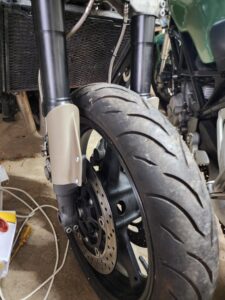
These materials will be appropriate for a variety of end-use applications, including infrastructure, energy, defense and marine, among others. Voltage has 3D-printed surfboards, structural motorcycle components, electrical utility enclosures, and an 8-foot-by-14-foot autonomous ocean-monitoring buoy. It also plans to print a scaled-down canoe for use by children.
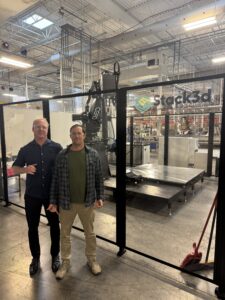
Last October, Young and Raimo visited CEAD BV, the Dutch maker of large-format additive manufacturing (LFAM) machines. CEAD also specializes in processing a wide range of composite thermoplastic materials using its advanced pellet extruders.
Young considers the HDPro-brand composite material that CEAD developed jointly with German materials specialist DIPROMat GmbH to be the gold standard resin for making large, durable, heavy-duty parts, particularly for applications such as boat hulls and watercraft.
Wanting to benchmark Voltage and Eclipse X9 against the best, they ordered a 20-foot-long, 3,500-pound boat that CEAD 3D-printed using HDPro. They finally took delivery of the boat in Hawai’I early this summer.
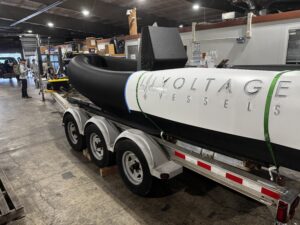
“We’re now testing our material against the best in the market,” Young said recently. “We’re validating our materials,” which he says have better adhesion properties than HDPro, meaning they can be more easily painted.
Early testing indicates that Eclipse X9 offers better tensile strength in both the X print direction (yielding higher printed structural strength) and the Z perpendicular layers (providing improved interlayer performance), better bending strength in the X direction (meaning stiffer marine structures and tooling), very low water absorption (for dimensional stability in wet environments), and excellent heat deflection properties (for improved solar and service-temperature resilience).
Promoting circular manufacturing
Young’s larger vision revolves around circular manufacturing. Parts made from Eclipse X9 are weldable, highly repairable and recyclable, making them an environmentally friendly alternative to components made from fiberglass, wood laminates, aluminum or commodity plastics.
He also wants to create what he refers to as a distributed manufacturing network, meaning creating production sites close to where the resulting products will be used. He foresees setting up basalt refineries in quarries to allow for faster deployment and less environmental impact related to transporting products across the country or the world.
Discover Material Selection with Prospector Premium, learn more here!
For Young, his mission is not simply to bring manufacturing “back” to Hawaiʻi. It is to bring more high-value innovation to Hawaiʻi, creating skilled jobs that support local families and the local economy while proving that cleaner materials and distributed production can work in some of the world’s toughest environments.
“We want to create jobs that help people live more in balance with the places they call home,” he says. “That means building products that are less toxic, less energy intensive and easier to repair, reuse and recycle.”
Hawaiʻi may be the proving ground, he noted, but the model is not limited to islands. “If Voltage can make circular manufacturing work in a place defined by saltwater, high logistics costs, limited landfill space and fragile ecosystems, the same approach can help communities around the world manufacture closer to the point of need with less waste and greater resilience.”

The views, opinions and technical analyses presented here are those of the author or advertiser, and are not necessarily those of ULProspector.com or UL Solutions. The appearance of this content in the UL Prospector Knowledge Center does not constitute an endorsement by UL Solutions or its affiliates.
All content is subject to copyright and may not be reproduced without prior authorization from UL Solutions or the content author.
The content has been made available for informational and educational purposes only. While the editors of this site may verify the accuracy of its content from time to time, we assume no responsibility for errors made by the author, editorial staff or any other contributor.
UL Solutions does not make any representations or warranties with respect to the accuracy, applicability, fitness or completeness of the content. UL Solutions does not warrant the performance, effectiveness or applicability of sites listed or linked to in any content.