

Specialty Thermoplastics Can Enable New Designs, Deliver Enhanced Performance and Processability, and Address Regulatory Changes
Authors: Jim Creeley, Yohana Pérez, Kristopher Rexius, SABIC’s Specialties Business
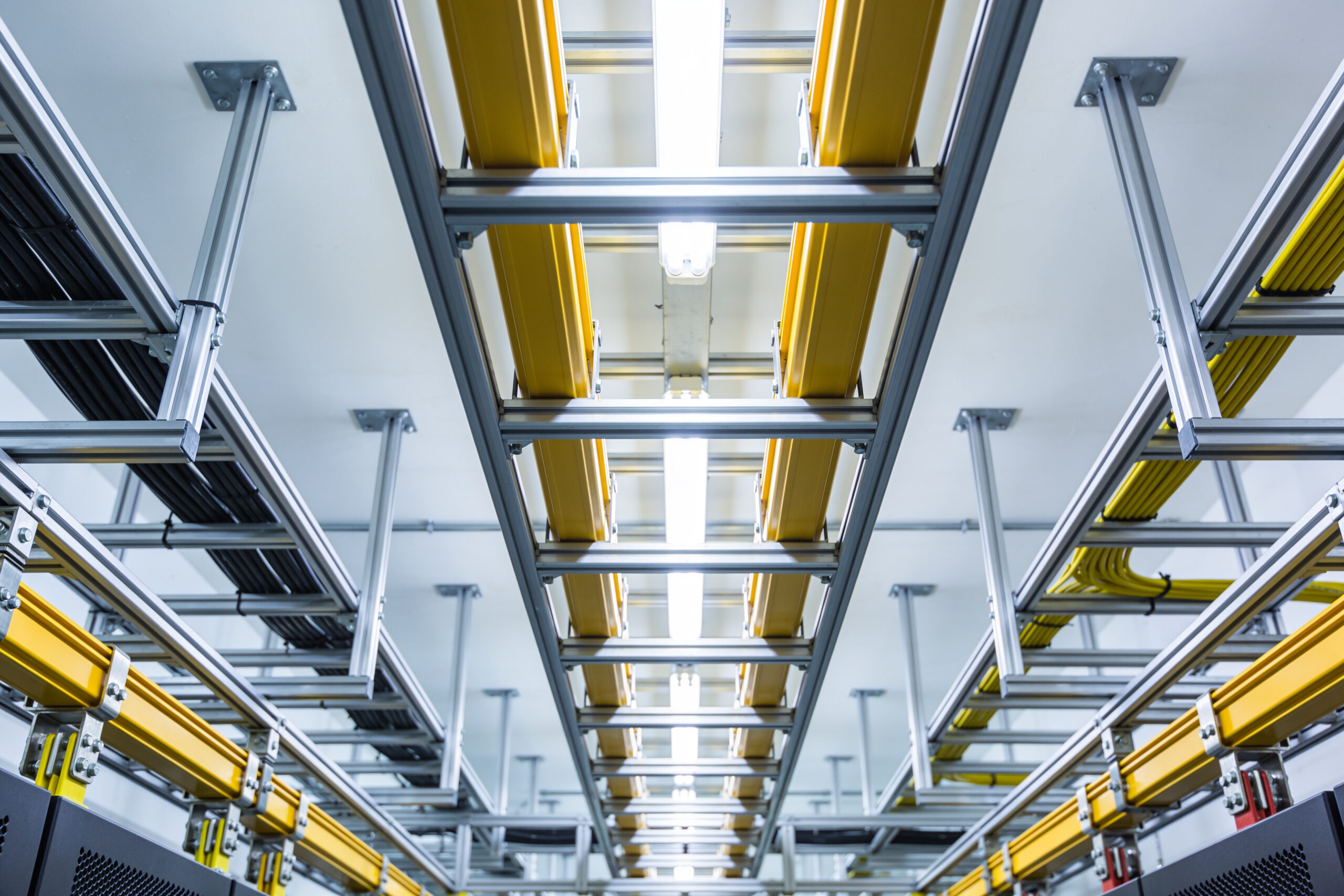
Manufacturers of rigid, extruded profiles for electrical and electronics (E&E) applications face a dual challenge. These products need to facilitate rapid, extensive infrastructure buildouts across the telecommunications, information technology, and energy generation and storage industries. At the same time, they must meet escalating requirements for performance, safety and regulatory compliance.
Profiles including overhead busway insulation, conduit, cable trays, fiber optic raceways and heating/ventilation and air conditioning (HVAC) ducts are essential for construction and expansion of critical infrastructure. For example, they play an important role in power distribution and cooling of AI data centers, a global market expected to expand at a 23.4 percent compounded annual growth rate (CAGR) through 2033.¹
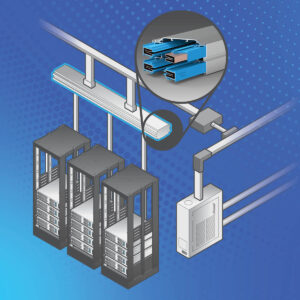
To keep pace with intensive infrastructure growth and evolving requirements such as regulatory restrictions on halogens and per- and polyfluoroalkyl substances (PFAS), profile manufacturers are considering replacing metal and traditional resins with polyphenylene ether (PPE)-based materials. As alternatives to polyamide (PA66), polyvinyl chloride (PVC) and polycarbonate / acrylonitrile-butadiene-styrene (PC/ABS) materials, these specialty dielectric resins can offer solutions to the twin demands for fast infrastructure build-out and enhanced properties.
Easy Processing of PPE Resins in Extruded E&E Profiles
In the face of escalating demand for extruded E&E profiles, amorphous, unreinforced PPE materials, such as SABIC’s NORYL™ resins, can offer wider processing windows and cooling ranges compared to semi-crystalline resins. The higher melt strength of NORYL resins may lead to increased throughput vs. semi-crystalline resins that require more-controlled cooling periods. Also, unreinforced PPE resin offers lower abrasion compared to glass fiber-reinforced resin systems, helping to extend the life of dies and downstream equipment. Compared to metal, PPE resins help avoid time-consuming secondary operations such as polishing. These attributes contribute to higher productivity and faster order fulfillment.
Innovative Thermoplastic Profile Designs May Accelerate Installation
NORYL PPE resins help enable new, lightweight profile designs that may accelerate installation in data centers and other facilities, compared to heavier metal profiles. They can also simplify scale-up or reconfiguration of existing infrastructure. For instance, their ability to be extruded in very long lengths with high dimensional stability can give designers greater freedom to create uninterrupted spans of busway insulation. These insulation profiles facilitate attachment or relocation of tap-off units for data center server racks without the need for special tools or downtime.
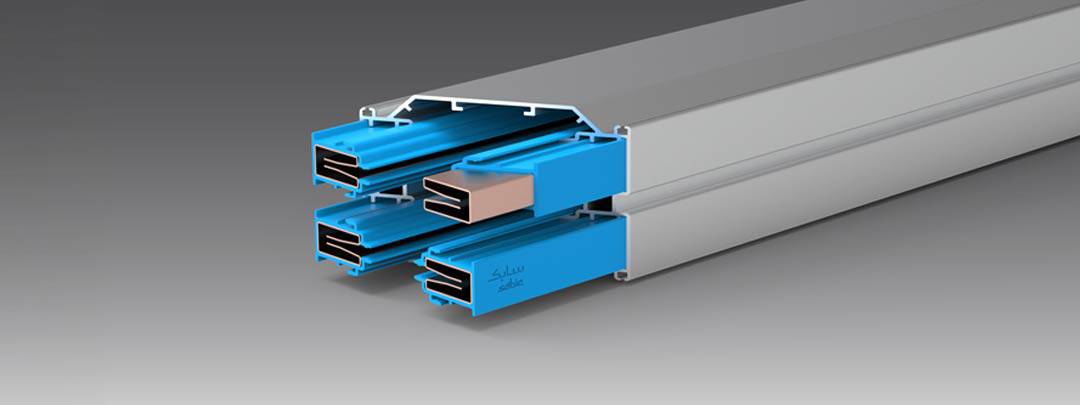
SABIC helps manufacturers develop new extruded profile designs using NORYL resins by providing comprehensive application development support. At its Global Application Technology (GApT) centers of excellence SABIC offers assistance with material analysis and selection, process optimization and equipment reviews, and provides expertise and resources specific to the E&E industry. These services may help manufacturers accelerate their validation process.
Enhanced Performance and Compliance of PPE Resin
During operation, SABIC’s PPE materials maintain their properties during exposure to elevated temperatures and amperages up to 1,000A, such as those in AI data centers, and deliver other key properties:
- Excellent dimensional stability. Compared to materials like PA66 resins, NORYL resins do not require glass fiber reinforcement to resist warpage and remain rigid during extrusion and in use. Further, NORYL resins exhibit very low moisture absorption (97 percent lower than PA66 materials), making them suitable for humid indoor and outdoor environments. The hydrolytic stability of NORYL resins helps to maintain mechanical and thermal properties over the useful life of the application.
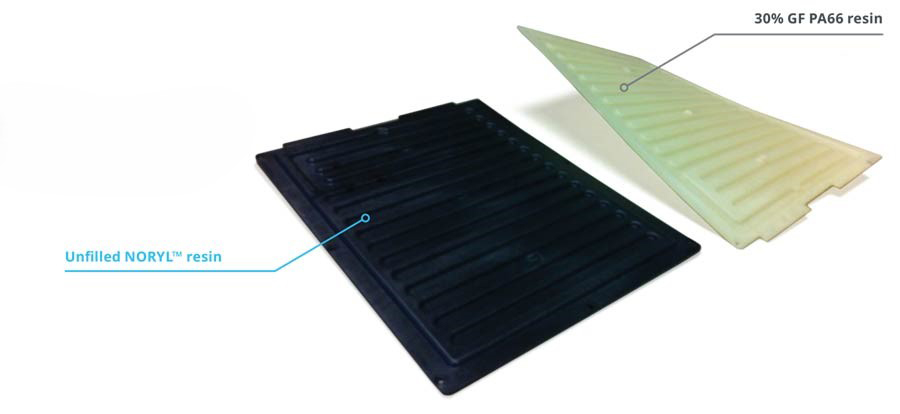
- High dielectric strength. The dielectric strength of PPE-based resins remains relatively stable over a wide temperature range, enabling these materials to maintain excellent insulative properties. In contrast, the insulative properties of PA66 resins decrease at high temperatures.
-
Non-brominated/non-chlorinated FR. Many polymer materials for E&E dielectric profiles must be modified with flame-retardant (FR) additives. It is important to choose an FR chemistry that avoids halogens because some are considered substances of very high concern (SVHC) due to the possibility for emission of corrosive fumes in a fire. NORYL resins already possess strong baseline FR properties derived from their polymer backbone. Further, when FR enhancement is needed for certification, SABIC uses non-brominated/non-chlorinated additives. In contrast, PVC resins – traditionally used for conduit, ducts and raceways – contain chlorine atoms that provide inherent FR properties.
Many NORYL resins also meet the rigorous UL94 V0 standard for fire resistance at thin gauges, which permit slimmer insulation profiles that save space and raw materials.
- Thermal resistance. High thermal resistance helps prevent material degradation and warpage under elevated heat exposure. NORYL resins have relative thermal index (RTI) values that typically range from 110°C to 125°C, which are adequate for applications like busway insulation. Also, these PPE resins retain stable insulative properties under exposure to high temperatures.
- Low density. Compared to glass fiber-reinforced PA66 resins, as well as PC/ABS and PVC materials, unfilled PPE resins have a lower density that can cut weight for lower shipping costs, easier profile installation and safer operation. Low density also helps reduce the amount of resin required in each profile, leading to potential cost and raw material savings.
-
PFAS regulatory compliance. Per- and polyfluoroalkyl substances are widely used in E&E insulation and rigid profiles to enhance FR properties and impart high dielectric strength and thermal resistance. As PFAS restrictions become more stringent, there is a need for alternatives.
NORYL NP5020 and NORYL NP6020 resins are certified under the UL746G standard for non-PFAS/non-fluorine materials. These unreinforced grades offer thin-wall flame retardance without chlorinated or brominated additives.
Meeting Increased Demand and Performance of Insulative Plastics
Rapid expansion of AI data centers, 5G infrastructure, Internet of Things (IoT) networks and solar energy farms is increasing demand for specialized thermal and insulative plastic profiles. The challenge of supplying far greater volumes of these profiles for constructing infrastructure is being exacerbated by tougher performance, safety and compliance requirements. Further complicating this picture, component designers are looking for materials that expand their freedom to create new configurations to meet evolving requirements or achieve a competitive advantage.
SABIC’s NORYL resins can surmount many of these hurdles by delivering improved processability, design flexibility, performance and regulatory compliance than traditional profile materials. The NORYL resin portfolio, based on PPE technology, is celebrating its 70th anniversary in 2026.
Visit these pages for additional insight and content downloads on each of our featured NORYL resins:
NORYL HS2000X resin: Americas
NORYL NHP5054 resin: Americas | Asia | Europe
NORYL NH5120 resin | NORYL NH5120BIO1 resin | NORYL NH5120BIO4 resin | NORYL NH5120RC3 resin
NORYL LTA6020 resin: Americas | Asia | Europe
NORYL NH6020 resin: Americas | Asia | Europe
NORYL SE1GFN2 resin: Americas | Asia | Europe
¹ AI Data Center Market (2026 - 2033), Grandview Research, https://www.grandviewresearch.com/industry-analysis/ai-data-center-market-report
Author Biographies:
Jim Creeley is the program leader for Emerging Segments at SABIC’s Specialties Business, where he leads initiatives focused on market exploration and new business development across the company’s global portfolio of specialty thermoplastic materials. His work includes identifying emerging opportunities for specialty polymers in AI data center infrastructure and other fast-growing applications. Jim holds a bachelor’s degree in chemical engineering from Bucknell University in Lewisburg, Pennsylvania.
Yohana Pérez is a business development manager at SABIC’s Specialties Business, with over 20 years of experience bridging the gap between product innovation and strategic market needs. Her strong background in flame retardant materials and regulations has driven technology advancements and growth at key customers in the electrical, energy and railway sectors. Yohana holds a Ph.D. in chemical engineering from Delft University of Technology in the Netherlands and a master’s degree in chemistry from the University of Alcalá in Spain.
Kristopher Rexius is the senior business manager for NORYL™ Resin at SABIC’s Specialties Business, where he develops and executes portfolio strategies which focus on creating unique customer solutions. Recent developments have focused heavily on differentiated offerings for alternative energy, energy storage, and AI data center infrastructure. Kristopher holds a bachelor’s degree in mechanical engineering from Purdue University in West Lafayette, Indiana, and a master’s degree in business administration from the State University of New York at Albany.

The views, opinions and technical analyses presented here are those of the author or advertiser, and are not necessarily those of ULProspector.com or UL Solutions. The appearance of this content in the UL Prospector Knowledge Center does not constitute an endorsement by UL Solutions or its affiliates.
All content is subject to copyright and may not be reproduced without prior authorization from UL Solutions or the content author.
The content has been made available for informational and educational purposes only. While the editors of this site may verify the accuracy of its content from time to time, we assume no responsibility for errors made by the author, editorial staff or any other contributor.
UL Solutions does not make any representations or warranties with respect to the accuracy, applicability, fitness or completeness of the content. UL Solutions does not warrant the performance, effectiveness or applicability of sites listed or linked to in any content.