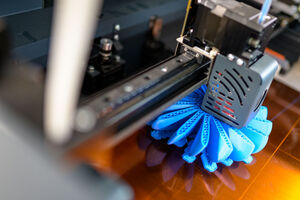
 For decades, additive manufacturing (AM) has focused on optimising three-dimensional spatial architectures, optimising strength-to-weight ratios within rigid, static constraints.
However, the emergence of four-dimensional (4D) printing introduces a paradigm shift: moving from static structural optimization to dynamic, time-dependent, so-called kinetic programming.
4D printing represents the ultimate integration of materials science, mechanical engineering and digital manufacturing. By shifting the complexity of a machine away from multi-part mechanical assemblies and moving it directly into the chemical structure of the material, design engineers can create more resilient, lightweight and autonomous systems. As computational design tools evolve and multi-material printing infrastructure becomes standard, programming the fourth dimension will transition from a specialized engineering feat to a fundamental manufacturing standard.
4D printing is not defined by a new hardware class. Instead, it is a software, design and materials science upgrade applied to existing additive manufacturing infrastructures.
By embedding anisotropy (dimensional variability) into a component during fabrication, engineers can program a predictable, pre-determined configuration change over time. This structural transformation occurs entirely without external mechanical actuators, motors, sensors, or wiring. The material itself acts as the sensor, the actuator and the structure. This offers an unprecedented opportunity to eliminate mechanical failure points, drastically reduce part counts and achieve true material-level autonomy.
Stimuli-Responsive Materials
To successfully implement 4D printing across manufacturing disciplines, engineers must classify these systems by how energy is converted at the molecular level. Materials enabling 4D printing can be broadly grouped into five functional categories based on their driving stimuli.
Table 1 The 4D Printing Master Material Matrix
| Material Class | Primary Materials | Activation Trigger | Mechanical / Industrial Mechanism |
| Thermo-Responsive | Shape Memory Polymers (SMPs), Shape Memory Alloys (SMAs), Liquid Crystal Elastomers (LCEs) | Thermal energy (Joule heating, ambient transition) | Entropic elasticity recovery, martensite-to-austenite phase transitions, nematic-to-isotropic clearing. |
| Moisture / Chemical-Responsive | Hydrogels, Cellulose-composite matrices, pH-sensitive polymers | Water absorption, solvent exposure, pH differentials | Differential swelling ratios across anisotropic print layers generating internal bending moments. |
| Photo-Responsive | Azobenzene-functionalised polymers, Light-activated SMPs | Specific light wavelengths (UV, NIR, visible) | Photochemical isomerization or photothermal heat generation inducing localized structural relaxation. |
| Magneto / Electro-Responsive | Ferromagnetic nanoparticle-doped polymers, Electro-active polymers (EAPs) | External magnetic fields, electric fields / voltage | Maxwell stress deformation, magnetic torque alignment, or integrated Joule heating. |
| Bio-Responsive | Enzyme-responsive polymers, cell-seeded biomaterials | Specific enzymatic reactions, cellular traction forces | Biochemical cleavage of crosslinks or cell-mediated tissue folding/remodeling. |
- Thermo-Responsive Matrices: SMPs, SMAs and LCEs
Thermal activation remains the most mature and load-bearing branch of 4D printing. It is governed primarily by three material classes:
- Shape Memory Polymers (SMPs): These thermoplastics or thermosets utilize a dual-segment molecular network containing permanent crosslinks (dictating the original shape) and switching segments (locking in a temporary shape). When heated above their glass transition temperature (), the polymer chains become highly compliant. Deforming the material and cooling it below 𝑇𝑔 locks in a temporary state. Reheating the material above 𝑇𝑔 releases the stored entropic strain energy, triggering a rapid return to the original geometry.
- Shape Memory Alloys (SMAs): Nitinol (NiTi) micro-wires or powders can be integrated into polymeric or metallic AM matrices. SMAs rely on a reversible, diffusionless crystalline phase transformation between a low-temperature, highly compliant martensite phase and a high-temperature, rigid austenite phase. This yields immense force generation compared to polymers.
- Liquid Crystal Elastomers (LCEs): LCEs combine the elastic properties of crosslinked polymer networks with the anisotropic optical and mechanical properties of liquid crystal mesogens. Mesogens combine the ordered alignment of a solid crystal with the flow and mobility of a liquid. They typically feature a rigid central core (often shaped like a rod or a disk) combined with flexible parts like alkyl chains. The rigid part forces molecules to align in a specific direction. The flexible parts prevent the molecule from locking into a rigid solid, maintaining fluidity.
By printing LCEs, engineers can program localized alignment. Heating triggers a nematic-to-isotropic phase transition, causing a dramatic, highly reversible contraction along the alignment axis (nematics are a type of liquid crystal phase where rod-shaped molecules align loosely in parallel lines along a single direction without forming distinct layers).
- Moisture and Chemical-Responsive Networks
Commonly deployed via Direct Ink Writing (DIW) or Stereolithography (SLA), moisture-responsive systems utilize hydrophilic crosslinked hydrogels or cellulose-composite matrices. Transformation is driven by differential swelling ratios. When a high-swelling hydrogel layer is printed adjacent to a passive, rigid polymer layer, moisture absorption induces an asymmetric volume expansion. This creates internal bending moments that force the composite to curl or fold along a predictable radius. Chemical-responsive variants operate on similar principles, utilizing pH-sensitive polymers that swell or contract as ionic concentrations fluctuate in the surrounding fluid.
- Photo-Responsive Systems
The limitations of 3D printing have led to the development of 4D printing, which uses ultraviolet light to deposit materials layer. Photo-responsive 4D printing incorporates azobenzene-functionalized polymers or light-activated SMPs into photopolymer resins. When exposed to targeted wavelengths of light (typically either ultraviolet or near-infrared), the azobenzene molecules undergo a reversible cis-trans isomerization. This molecular rearrangement alters the packing density of the polymer chains, translating microscopic molecular movement into macroscopic bending without requiring ambient temperature fluctuations.
- Magneto and Electro-Responsive Smart Matter
Wireless, rapid actuation is achieved by doping standard printing resins or filaments with functional nanoparticles. Magneto-responsive systems embed ferromagnetic micro- or nanoparticles (such as iron oxide) into a flexible polymer matrix. When exposed to a localized, external magnetic field, the particles experience magnetic torque alignment, deflecting the structural matrix in milliseconds. Electro-active polymers (EAPs) and electro-responsive matrices rely on integrated conductive carbon nanotube networks. Applying a voltage induces either Maxwell stress deformation or highly localized Joule heating, which indirectly triggers a thermomechanical response in the surrounding polymer.
- Bio-Responsive Metamaterials
Occupying the frontier of biomedical engineering, bio-responsive materials alter their conformation in response to specific biological markers, such as enzymatic cleavage or cellular traction forces. Enzymatic cleavage is the process where specific enzymes break chemical bonds within molecules like proteins or DNA. Enzymes (proteases or peptidases) target specific peptide bonds between amino acids. Each enzyme recognizes a specific amino acid sequence or target site before cutting. For example, trypsin cuts after lysine and arginine residues, while chymotrypsin cuts after aromatic amino acids. Restriction enzymes or glycosylases cleave specific phosphodiester or sugar-base bonds within nucleic acids (DNA or RNA).
Upgrade the status quo. Find solutions, not just materials, learn more here!
By printing biocompatible hydrogels seeded with living cells, bio-engineers can design scaffolds that morph dynamically as tissue grows, or smart drug-delivery matrices that degrade and release therapeutics only when encountering specific disease enzymes.
Designing in the fourth dimension
Designing for the fourth dimension requires a total reversal of traditional CAD principles. Engineers must reverse engineer from the desired transformed state to calculate the required as-printed state. This workflow relies heavily on voxel-level design and advanced Finite Element Analysis (FEA).
To program motion without moving parts, engineers deliberately engineer anisotropy. In a standard Fused Filament Fabrication (FFF) process, this is achieved by manipulating toolpath deposition vectors, print speeds and thermal dissipation rates. When a polymer is extruded, the polymer chains are physically stretched and aligned along the deposition path, locking in residual tensile stresses upon rapid cooling. By altering the raster angle (for example, printing a 0° layer directly on top of a 90° layer), the design engineer creates an internal bilayer laminate structure. When exposed to a stimulus, the differential stress relaxation or expansion rates between the layers generate a predictable, calculated structural deformation.
Established Applications
Market data suggests that by 2030, 4D printing applications in construction could be valued at approximately $2.5 billion. A promising future for biomedical applications is possible, but even so there are limits to what can be achieved, because the materials are rigid.
The removal of traditional mechanical components makes 4D printing highly attractive across diverse manufacturing sectors:
- Aerospace: Replacing heavy, motorized hinges on satellites with self-deploying solar arrays triggered by solar radiation, or creating morphing UAV wings that adapt aerodynamically to temperature changes.
- Biomedical: Developing vascular stents that travel compactly through a patient’s vasculature at room temperature and expand autonomously to support an artery upon reaching body temperature (37°C).
- Industrial Infrastructure: Designing self-sealing smart valves or piping joints that expand to seal fluid leaks autonomously when exposed to specific chemical contaminants or extreme temperatures.
Table 2 Real-world engineering applications mapped to primary responsive material classes
| Manufacturing / Industrial Sector | Concrete Engineering Application | Primary Material Class | Primary Engineering Benefit |
| Aerospace & Space Systems | Self-deploying satellite solar arrays and deep-space reflectors. [1] | Thermo-Responsive (SMPs / SMAs) | Mass Reduction: Eliminates heavy electric motors, gearboxes, and pyrotechnic release fasteners. [1] |
| Aerospace & Space Systems | Morphing Unmanned Aerial Vehicle (UAV) wings that adapt geometry mid-flight based on aerodynamic friction. | Thermo-Responsive (LCEs) or Electro-Responsive | Aerodynamic Efficiency: Provides a continuous, seamless wing surface without mechanical flaps or joints. |
| Biomedical & Healthcare | Self-expanding vascular stents and minimally invasive surgical tools. | Thermo-Responsive (Biocompatible SMPs / Nitinol SMAs) | Minimally Invasive Delivery: Travels compactly through small catheters and deploys autonomously at body temperature (37°C). |
| Biomedical & Healthcare | Target-activated drug delivery matrices and dynamic tissue-engineering scaffolds. | Bio-Responsive | Autonomous Diagnostics: Releases therapeutic payloads only when interacting with specific disease-state enzymes. |
| Civil & Infrastructure | Smart water management systems, adaptive piping joints, and self-sealing infrastructure valves. | Moisture / Chemical-Responsive (Hydrogel composites) | Zero-Power Autonomy: Seals leaks or changes fluid flow paths passively when exposed to moisture or specific pH fluctuations. |
| Automotive & Transport | Self-regulating engine cooling grilles and aerodynamic active spoilers. | Thermo-Responsive (SMAs / SMPs) | Component Consolidation: Bypasses the vehicle’s electrical system, using ambient engine heat or drag directly to adjust airflow. |
| Robotics & Automation | Soft-robotic grippers for delicate, variable-geometry object sorting on assembly lines. | Magneto-Responsive or Photo-Responsive | High Latency Control: Allows for ultrafast, wireless, and non-contact actuation without heavy pneumatic lines. |
| Consumer Goods & Packaging | Flat-packed furniture or shipping containers that self-assemble upon thermal or moisture exposure. | Thermo-Responsive or Moisture-Responsive | Logistics Optimization: Maximizes shipping density and eliminates manual fastening tools during product unboxing. |
| Electronics & Hardware | Remotely actuated microfluidic valves, switches, and adaptive circuit protection. | Electro-Responsive (Carbon nanotube-doped resins) | Micro-Scale Integration: Embeds mechanical kinetic switches directly into static circuit board footprints. |
Technology Inhibitors
Moving 4D printing from a laboratory environment to a scalable production floor requires addressing critical engineering limitations. Despite its massive potential, several profound engineering barriers currently restrict 4D printing to research environments and low-volume applications:
- Material Fatigue, Degradation and Hysteresis
While shape-memory alloys (SMAs) boast high fatigue resistance, smart polymer matrices degrade rapidly. Over repeated activation cycles, polymers experience irreversible structural deformation, losing their shape-memory efficiency. Additionally, energy is continuously lost as heat during cycling (high hysteresis), limiting their use in structural, high-cycle industrial applications.
- Slow Response Times (High Latency)
For manufacturing engineers, speed is paramount. Many current 4D materials – especially moisture- or heat-driven hydrogels and SMPs – suffer from slow thermal or chemical diffusion rates. A part may take several seconds, or even minutes, to fully transform. This latency makes them unviable for high-speed automated assembly lines or rapid-response robotic grippers.
- Extreme Computational and Software Constraints
Traditional CAD tools are fundamentally unequipped for 4D printing. Designers require parametric modelling software to accurately predict how different toolpaths and material boundaries will warp under external forces over time. Simulating multi-material non-linear stress-strain states requires massive computing power and the software pipeline remains largely fragmented and bespoke.
- Complete Absence of Regulatory and Testing Standards
In highly regulated sectors like aerospace, automotive and medicine, every component must undergo rigid certification. There are currently no standardized ASTM or ISO testing frameworks explicitly written to qualify 4D-printed parts. Determining how a dynamic, shifting material will behave under unpredictable environmental loads over a 10-year lifespan remains a significant liability for manufacturing firms.
Future Potential Applications
As computational tools and multi-material additive manufacturing evolve, 4D printing is moving beyond basic shape-shifting into highly advanced, functionally active systems. Key future applications currently driving R&D include:
- Self-Repairing Structures: Urban planning and civil engineering labs are prototyping smart piping systems. If a pipe cracks or faces a sudden shift in fluid pressure, moisture-activated or thermal-activated hydrogel composites expand to seal the fracture or widen the pipe diameter dynamically, preventing bursts without human intervention.
- Bio-Resorbable, Growth-Adaptive Implants: In healthcare, the next horizon is bioresorbable cardiovascular implants. Emerging research showcases heart valves printed from shape-memory polymers that adapt their geometry as a paediatric patient grows. Once surrounding biological tissue takes over, the original 4D structure safely degrades inside the body, completely eliminating the need for follow-up revision surgeries.
- Adaptive Camouflage and Defence: Militaries are exploring magneto- and photo-responsive polymers to create reconfigurable kinetic armour and adaptive camouflage skins. These materials change texture, rigidity, or surface orientation instantly when exposed to localized electrical or magnetic currents.
- Extraterrestrial Self-Assembly: NASA is testing 4D-printed components for deep space exploration. Large solar arrays, protective heat shields and deep-space antennas are printed and packed as ultra-dense, flat components. Upon exposure to solar radiation or thermal gradients in orbit, they self-deploy without requiring complex mechanical hinges or actuators.
Which 3D printing methods are best for 4D Printing
Matching the correct 3D printing method to the intended 4D response is the single most critical step. Because 4D printing relies entirely on programming structural anisotropy into a part, the way a 3D printer deposits or cures a material dictates how, where and if that material will transform when a stimulus is applied. The choice is a direct trade-off between locked-in mechanical strain, material distribution and geometric resolution.
The vast majority of 4D printing is restricted to three specific additive manufacturing technologies. Each serves a completely different type of mechanical transformation:
Table 3 Additive Manufacturing Methods and their Applications
| Additive Manufacturing Method |
Primary 4D Material State |
How it Programs Motion |
Best Suited For |
| FFF / FDM | Thermoplastic Filaments | Trapped mechanical toolpath stress | Thermo-responsive SMPs |
| SLA / DLP | Liquid Photopolymer Resins | Voxel-level cross-link density | Light & Magnetic actuation |
| Direct Ink Writing (DIW) | Viscoelastic Pastes / Hydrogels | Shear-induced microstructure alignment | Moisture & Bio-responsiveness |
- Fused Filament Fabrication (FFF / FDM)
- FFF is the gold standard for thermo-responsive Shape Memory Polymers (SMPs) like PLA and PCL. The extrusion process physically stretches polymer chains as they pass through the heated nozzle. When cooled rapidly on the print bed, this mechanical strain is locked into the part’s toolpaths.
- The 4D Mechanism: Designers manipulate the slicer’s raster angles (eg cross-hatching a 0° layer with a 90° layer). When heated above its glass transition temperature (𝑇𝑔), the material releases this directionally locked-in stress, causing predictable warping, curling, or folding.
- Limitation: Poor material blending and lower spatial resolution.
- Stereolithography (SLA) & Digital Light Processing (DLP)
- Photopolymerization methods are ideal for multi-material, high-resolution voxel programming – the creation of software and 3D graphics using voxels (volumetric pixels) instead of traditional 3D polygons (triangles and vectors). Rather than relying on extruded stress, vat systems allow engineers to alter the cross-linking density of a resin on a pixel-by-pixel basis.
- The 4D Mechanism: By tuning the light intensity or exposure time across a single layer, the user can create regions that are highly cross-linked (rigid) directly adjacent to under-cured regions (highly flexible and swelling-prone). This is heavily utilized for photo-responsive and magneto-responsive resins doped with nanoparticles.
- Limitation: Brittle base materials; limited to liquid thermoset resins.
- Direct Ink Writing (DIW) / Liquid Deposition Modelling
- DIW is an extrusion method that handles paste-like, viscoelastic inks rather than molten plastics. It is the absolute benchmark for moisture-responsive hydrogels and bio-responsive cellulose matrices.
- The 4D Mechanism: The shear forces generated inside the nozzle during printing force microscopic fibres (like wood cellulose fibrils) to align perfectly parallel to the print path. When immersed in water, the material expands massively perpendicular to the fibre alignment, creating predictable biomimetic movement (similar to how pinecones open and close).
- Limitation: Very low structural load-bearing capacity; requires post-print curing phases.
AM technologies unsuitable for 4D printing
- Selective Laser Sintering (SLS) & Multi Jet Fusion (MJF): Powder bed fusion technologies are designed to create highly isotropic, structurally uniform plastic parts. Because the raw material powder is fused evenly by a laser or heat source, it eliminates internal residual stresses and orientation gradients. Without internal anisotropy, there is no differential expansion to drive a 4D transformation.
- Laser Powder Bed Fusion (LPBF / DMLS) for Metals: While shape-memory alloys (like Nitinol) can be printed via laser melting, the extreme thermal gradients of the laser melt pool often cause unpredictable crystalline defects and severe residual cracking.
- Metallic 4D printing: Remains highly experimental and notoriously difficult to calibrate compared to polymers

The views, opinions and technical analyses presented here are those of the author or advertiser, and are not necessarily those of ULProspector.com or UL Solutions. The appearance of this content in the UL Prospector Knowledge Center does not constitute an endorsement by UL Solutions or its affiliates.
All content is subject to copyright and may not be reproduced without prior authorization from UL Solutions or the content author.
The content has been made available for informational and educational purposes only. While the editors of this site may verify the accuracy of its content from time to time, we assume no responsibility for errors made by the author, editorial staff or any other contributor.
UL Solutions does not make any representations or warranties with respect to the accuracy, applicability, fitness or completeness of the content. UL Solutions does not warrant the performance, effectiveness or applicability of sites listed or linked to in any content.