

Presented by Toray Research Center Inc.
Recorded on July 01, 2026
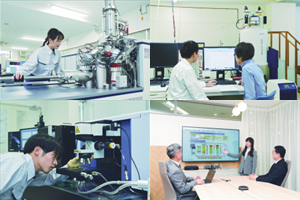
As AI, high-performance computing, and electrification continue to accelerate, semiconductor and energy-related materials are being pushed to unprecedented limits. Increasing power density, device integration, and reliability demands are creating new challenges in material design, processing, and failure analysis.
In advanced semiconductor packaging, materials such as underfills and encapsulants must withstand severe thermo-mechanical stress while maintaining long-term reliability. In catalytic and energy-related systems, subtle variations in coordination structure, oxidation state, and interfacial chemistry can strongly influence reaction performance and process stability.
However, conventional analytical methods often struggle to distinguish between material states that appear chemically similar but behave very differently in real applications. These hidden differences can lead to curing variability, degraded catalytic activity, reduced reliability, and unexpected process outcomes.
In this webinar, Toray Research Center (TRC) introduces advanced chemical analysis approaches that reveal these hidden material states from a mechanism-based perspective.
The webinar features two technical sessions.
The first session addresses epoxy resin analysis for semiconductor packaging materials, including underfills and encapsulants. By combining thermal analysis techniques such as DSC and FSC with chemical and compositional analyses including TOF-SIMS and MALDI-MS, TRC demonstrates comprehensive evaluation of curing kinetics, reaction products, and filler–resin interactions influencing curing behavior. The session highlights how these analyses support reliability and process optimization for AI accelerators and high-power semiconductor devices.
The second session presents an innovative methodology combining nano-electrospray ionization mass spectrometry with X-ray Absorption Fine Structure (XAFS) for direct structural identification of metal–organic complexes in solution. The approach enables detailed evaluation of coordination structures and oxidation states in solution, providing valuable insights for catalytic reactions, wet chemical processing, and energy-related material development.
This webinar is aimed at professionals seeking analytical methods that provide clarity, robustness, and practical relevance for advanced material development.

The views, opinions and technical analyses presented here are those of the author or advertiser, and are not necessarily those of ULProspector.com or UL Solutions. The appearance of this content in the UL Prospector Knowledge Center does not constitute an endorsement by UL Solutions or its affiliates.
All content is subject to copyright and may not be reproduced without prior authorization from UL Solutions or the content author.
The content has been made available for informational and educational purposes only. While the editors of this site may verify the accuracy of its content from time to time, we assume no responsibility for errors made by the author, editorial staff or any other contributor.
UL Solutions does not make any representations or warranties with respect to the accuracy, applicability, fitness or completeness of the content. UL Solutions does not warrant the performance, effectiveness or applicability of sites listed or linked to in any content.