

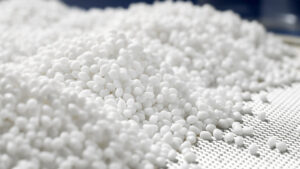
Sustainable materials are reshaping the plastics industry, and biodegradable polymers are becoming more widely used across Europe.
For injection molders, this shift brings both opportunity and complexity. As regulatory pressure increases and demand for eco‑friendly products grows, molding companies need to adapt to new material behaviors, validation requirements and processing standards.
Europe, a market in transformation

The biodegradable plastics market in Europe is expanding at a remarkable pace, with projections showing growth from $5.62 billion (USD) in 2025 to $39.50 billion (USD) by 2035, representing a compound annual growth rate (CAGR) of 21.54%. This surge reflects strong policy drivers such as the European Union (EU) Circular Economy Action Plan and Single‑Use Plastics Directive, both of which are accelerating the replacement of fossil‑based polymers.
More broadly, Europe remains the largest global market for biodegradable plastics, accounting for 41.42% of global revenues in 2025, underscoring the region’s long-term leadership in sustainable materials adoption.
At the same time, the broader European bioplastics sector is increasing production capacity across polymers such as polylactic acid (PLA), polyhydroxyalkanoates (PHA), bio‑based polyethylene (bio‑PE) and bio‑based polypropylene (bio‑PP) — materials well suited to injection molding. In Europe (EU27+3), utilization rates for bioplastics production are slightly above global averages, reaching as much as 73%. This indicates growing downstream demand from molders.
How does this affect our injection-molding sector?
The injection molding landscape is evolving as demand for new materials grows. The market for injection‑molding materials in Europe was valued at $5.79 billion (USD) in 2025 and is projected to reach $14.72 billion (USD) by 2033, representing a CAGR of 16.82%. According to Market Research Intellect, much of this growth is driven by increased adoption of recycled and bio‑based polymers across industries such as automotive, packaging and consumer goods.
Biodegradable and bio‑based plastics are moving from niche use into mainstream injection‑molded product portfolios. For molders, this means rethinking:
- Material selection and compatibility – Biodegradable polymers often require different drying, temperature control and shear management compared to traditional plastics.
- Tooling and cycle–time optimization – PLA, PHA and starch blends may cool differently or exhibit varying shrinkage, which can impact mold design and part tolerances.
- End–use performance testing – Mechanical strength, thermal behavior and degradation characteristics need to be evaluated based on application requirements and relevant standards.
As companies innovate and scale capacity in Europe, molders need to demonstrate they can process these materials consistently.

Regulatory requirements are driving the shift toward sustainable materials. Policies focused on compostability, recyclability and reduced environmental impact are accelerating adoption of biodegradable plastics among brand owners.
Consumers are also shaping demand. Rising awareness of plastic waste is influencing buying decisions and increasing expectations for eco‑friendly packaging and components. These expectations extend across the value chain, requiring molders to evaluate new materials as priorities around performance and sustainability evolve.
This underscores the importance of material validation as biodegradable plastics move into broader use. A key barrier to adoption is uncertainty around material performance and regulatory requirements.
Injection molders need clarity on several questions:
- Does the material meet the required mechanical properties for the intended application?
- How does the material align with relevant sustainability standards?
- How does the material behave under actual production conditions?
- Are there differences in long‑term biodegradation or compostability?
Where third‑party validation informs material evaluation
This is where third‑party validation and test specimen production, supported by process data acquisition systems integrated into specimen production, play a key role.
UL Solutions creates test specimens from selected polymers, whether conventional, bio‑based or biodegradable, so materials can be assessed under real‑world manufacturing conditions.
This provides molders with:
- Reliable, standardized material data
Biodegradable resins can vary widely in performance depending on feedstock, supplier or processing technology. Specimens produced with process data acquisition during production support consistent, comparable data for:
- Mechanical testing
- Flammability and safety testing
- Environmental performance evaluation
- Certification submissions
- Support for testing workflows
As new biodegradable grades enter the market, outsourcing specimen production helps molders manage internal testing demand across evolving material sets.
- Visibility into regulatory considerations
Navigating regulatory requirements in Europe can be complex. Our testing services support evaluation against relevant standards and requirements for:
- Compostability
- Biodegradability
- Recycled content
- Safety and performance
- Understanding material behavior in application
Our expertise helps molders evaluate how biodegradable plastics behave in injection molding environments and how that behavior relates to scrap rates, cycle times and part quality.
The shift toward biodegradable plastics represents a structural change in the European plastics industry. As market growth accelerates, shaped by policy, innovation and demand, molders that invest in material understanding and evaluation will be better positioned to adapt.
By using testing services and process data to support material assessment, molders can incorporate biodegradable plastics into their portfolios with insights to inform material selection and application decisions. To learn more, visit UL.com/plastics
Sources:
Market Research Intellect, Europe Injection Molding Materials Consumption Market Report
European Bioplastics,EUBP presents the Results of the 2025 Market Data Report
Grand View Research, Biodegradable Plastic Market 2026 – 2033
Towards Chem & Materials, Europe Biodegradable Plastics Market Size | Companies Analysis 2026- 2035

The views, opinions and technical analyses presented here are those of the author or advertiser, and are not necessarily those of ULProspector.com or UL Solutions. The appearance of this content in the UL Prospector Knowledge Center does not constitute an endorsement by UL Solutions or its affiliates.
All content is subject to copyright and may not be reproduced without prior authorization from UL Solutions or the content author.
The content has been made available for informational and educational purposes only. While the editors of this site may verify the accuracy of its content from time to time, we assume no responsibility for errors made by the author, editorial staff or any other contributor.
UL Solutions does not make any representations or warranties with respect to the accuracy, applicability, fitness or completeness of the content. UL Solutions does not warrant the performance, effectiveness or applicability of sites listed or linked to in any content.