

Industry Insights
Explore insights from industry experts across topics like regulatory news, formulation best practices, market innovations and opportunities, and more. Want to contribute? Learn how you can share your expertise.
LATEST INDUSTRY INSIGHTS

Hydrophobic Coatings and Pigments: From Water Beading to Durable Protection
Hydrophobic coatings if formulated correctly can provide a plethora of advantages which may include self-cleaning, … Continued

EPA considers rule changes encouraging advanced recycling
Written July 2026 The U.S. EPA is considering changing how plastics recycling plants that use … Continued

Formulating Cleaners with Antibacterial Coatings: Benefits, Challenges, and Commercial Opportunities
As hygiene expectations continue to rise across household, institutional, healthcare, and food processing markets, formulators … Continued
INDUSTRY INSIGHTS ARCHIVE

Pigment concentrates play a valuable role in coatings formulations for all applications. From Point-of-Sale colorants that allow thousands of color choices at your neighborhood paint store, to industrial pigment dispersions used to precisely and efficiently match factory-applied coatings. Each pigment … Continued

Lubricant and metalworking fluid formulators are entering a period in which additive choice is no longer driven by performance alone. The modern formulation brief increasingly asks one chemistry—or one additive package—to support wear control, corrosion protection, oxidation stability, foam control, … Continued
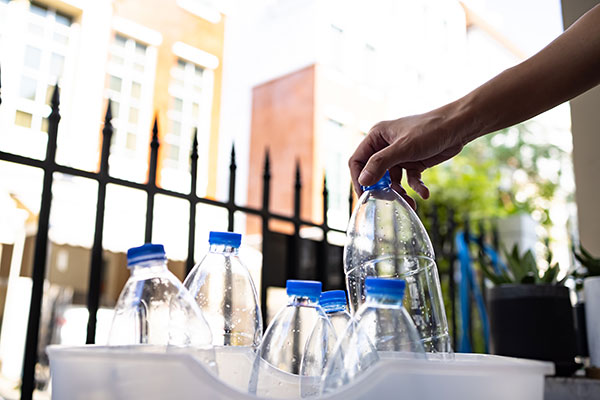
Polyester is a specific type of synthetic polymer. To be classified as a polyester, a polymer must contain the ester functional group (-COO-) in its main molecular chain. The commonly used engineering thermoplastics PBT (Polybutylene Terephthalate) and PET (Polyethylene Terephthalate) … Continued

In the competitive landscape of personal care, sunscreen formulation remains one of the most challenging and technically demanding categories. As we move into 2026, the industry is shifting away from seasonal messaging toward “year-round intelligent photoprotection”. Today’s formulators must balance the rigorous physics of … Continued

Hidden in Plain Sight: The Materials That Shape Everyday Safety Series Plastic names are often treated like answers. A reusable food container says “PP.” A water bottle says “HDPE.” A phone case advertises “PC” or “Lexan.” To most consumers, and … Continued